
Google is testing a policy in some regions that lowers free Gmail storage for new accounts to 5GB unless a phone number is provided. Existing users continue to receive the usual 15GB, though the change has prompted new discussions about privacy, security, and data collection practices.
The change was first spotted this week after Reddit users shared screenshots of a new account sign-up page with two free storage options. Android Authority confirmed the experiment with Google and noted that many of the complaints appear to come from users in African countries. The company has not indicated whether the policy will be rolled out globally.
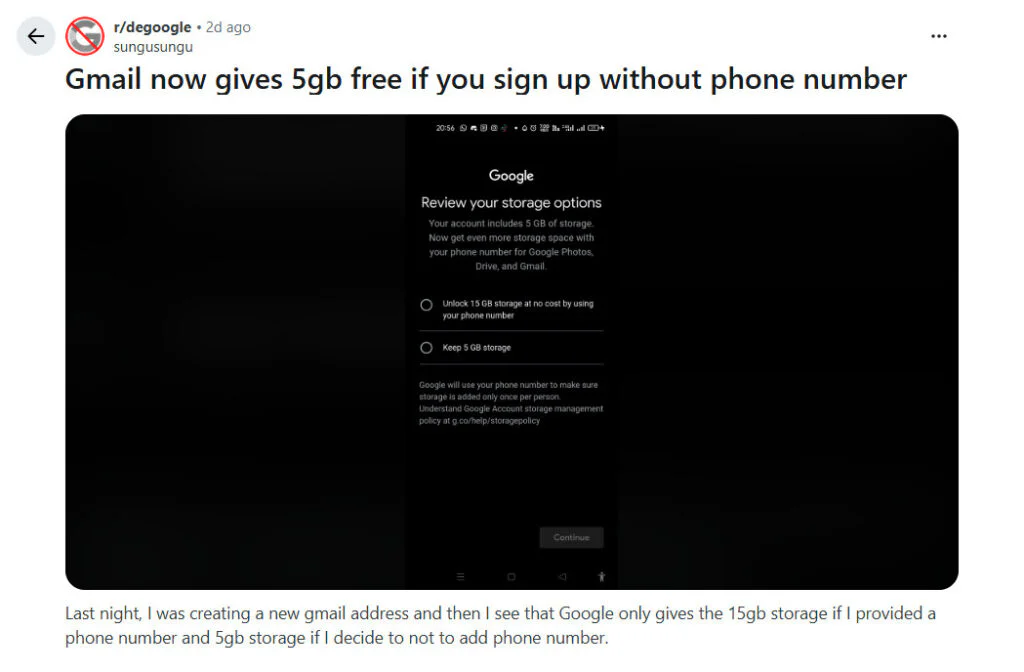
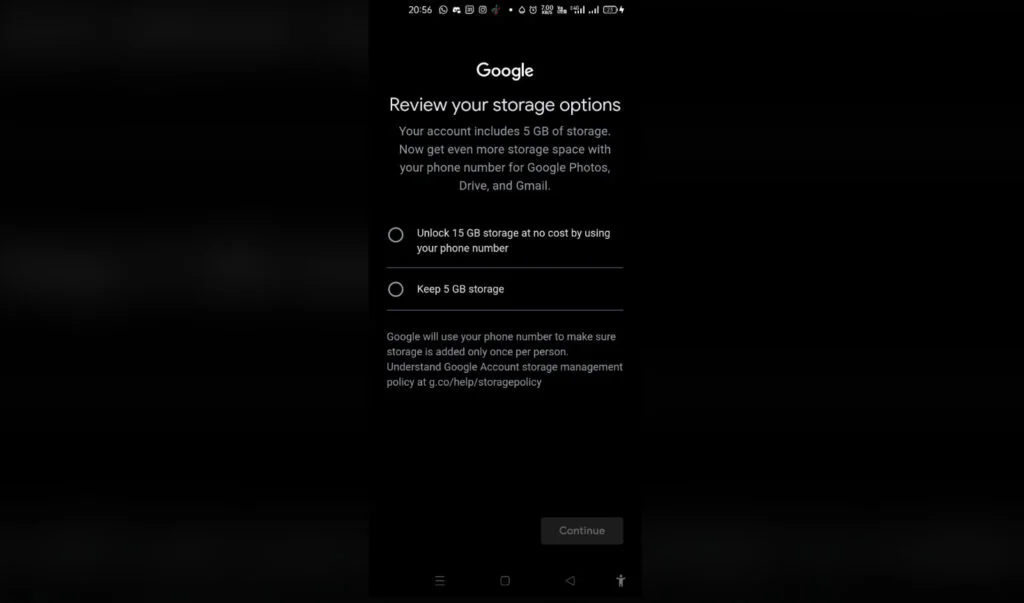
The trial limits new accounts created without phone verification to 5GB of shared storage across Gmail, Google Drive, and Google Photos. Users who verify a phone number regain access to the standard 15GB free tier. While Google has yet to publicly outline the reasoning behind the experiment, critics argue the policy increases pressure on users to provide additional personal data amid a broader shift toward privacy-focused alternatives like Proton Mail, DuckDuckGo, and Vivaldi.
The policy may also serve a security purpose. According to the sign-up page, Google will grant the expanded storage allowance only once per user, suggesting an effort to prevent abuse from individuals creating multiple accounts to claim additional free cloud storage. Requiring a phone number could also strengthen account recovery and improve protection if an account is lost or compromised.
The 5GB limit applies only to certain newly created accounts, leaving existing users unaffected for the time being with their standard 15GB of free storage intact. The test arrives as Google continues to introduce a steady stream of Gmail changes this year, including AI-powered tools, policy revisions, and new privacy features.
Gmail Pro and Ultra subscribers now have access to AI Overviews that can summarize lengthy email conversations. Google has also introduced an AI-driven inbox experience for select users that ranks messages based on factors such as recency, communication frequency, and user interaction habits. User response to the features has been divided.
Some of Google’s recent Gmail updates have been met with a more positive response. Users can now change their Gmail username without opening a new account, although the option is limited to one change per year and four changes over the account’s lifetime. Google also expanded end-to-end encrypted messaging on Gmail mobile apps for Workspace Enterprise Plus customers, boosting security for business communications even as the company faces scrutiny over consumer data practices tied to the phone-number storage test.
Maybe you would like other interesting articles?