
It has been nearly a month since LinkedIn introduced a feature allowing users to flag content as “AI slop,” and the platform reports that the tool has quickly become popular among its members. According to Hari Srinivasan, LinkedIn’s chief product officer, more than one million users have clicked the “seems like AI slop” button since its launch.
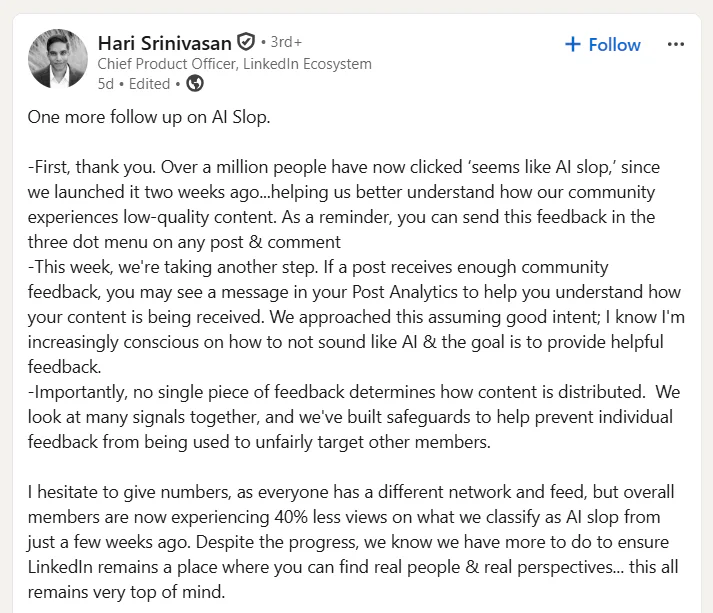
The widespread use of the reporting mechanism appears to be having a direct impact on content distribution. Srinivasan revealed that members are “now experiencing 40% less views” on posts that LinkedIn classifies as AI slop compared to a few weeks ago.
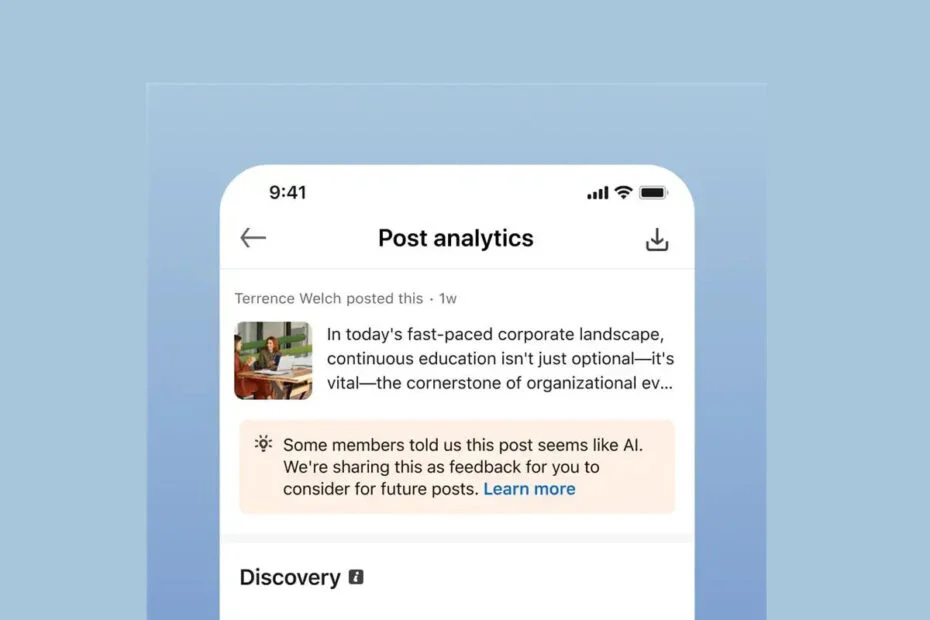
Building on this momentum, LinkedIn is now expanding the feature to provide direct feedback to creators. The platform will begin notifying users when one of their posts is being perceived by the community as AI-generated slop. This warning will appear within the post’s analytics dashboard.
According to Srinivasan, the notification exists to encourage more authentic writing among members, and it’s built on the assumption that people mean well. He said the feedback is meant to help, not punish, especially since many writers are now more aware of avoiding an “AI-sounding” tone.
Srinivasan addressed this when the reporting feature was announced last month, clarifying that the platform isn’t opposed to AI use in general. Instead, the goal is to tell apart low-effort, low-quality posts from stronger content that may still involve some AI assistance. “AI and slop are not the same thing,” he said, adding that many users already use AI to refine their ideas; the system simply aims to flag when writing feels inauthentic. He also noted that the feature relies on real human feedback about what sounds genuine, rather than an automated AI detector.
Basically, LinkedIn’s doing what a lot of big platforms are doing these days; instead of banning AI content outright, they’re leaning toward labeling it and setting some ground rules.
YouTube added clearer AI labels in May and now runs automated detection at upload. Spotify flags AI personas for listeners and includes AI song credits. By default, AI artist music stays out of recommendations, unless a user follows them directly.
Together, these moves suggest AI content is here to stay. Platforms aren’t banning it, just requiring labels or quality standards.
Maybe you would like other interesting articles?