
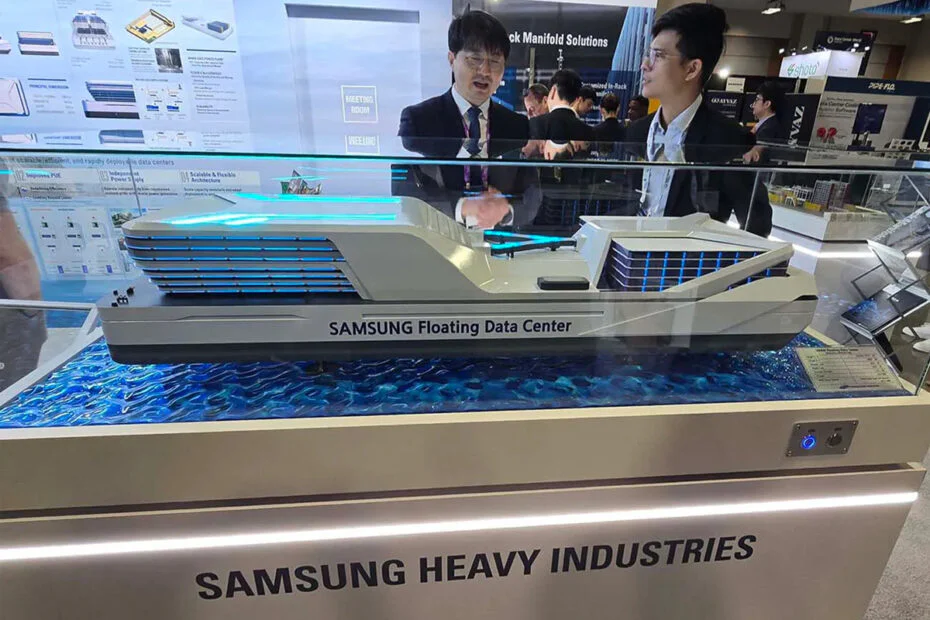
As demand for digital infrastructure grows, attention is beginning to shift from land-based facilities to offshore solutions. Samsung Heavy Industries is advancing a Floating Data Center concept, and its initial 50-megawatt design has already received Approval in Principle from the American Bureau of Shipping and Lloyd’s Register.
Instead of adapting existing ships, Samsung Heavy Industries is designing new vessels specifically built to support high-density computing operations. The company recently partnered with Greece-based shipowner Capital Clean Energy Carriers to advance the concept toward working prototypes, with a focus on evaluating how factors such as humidity, salt exposure, and vibration could affect performance at sea.
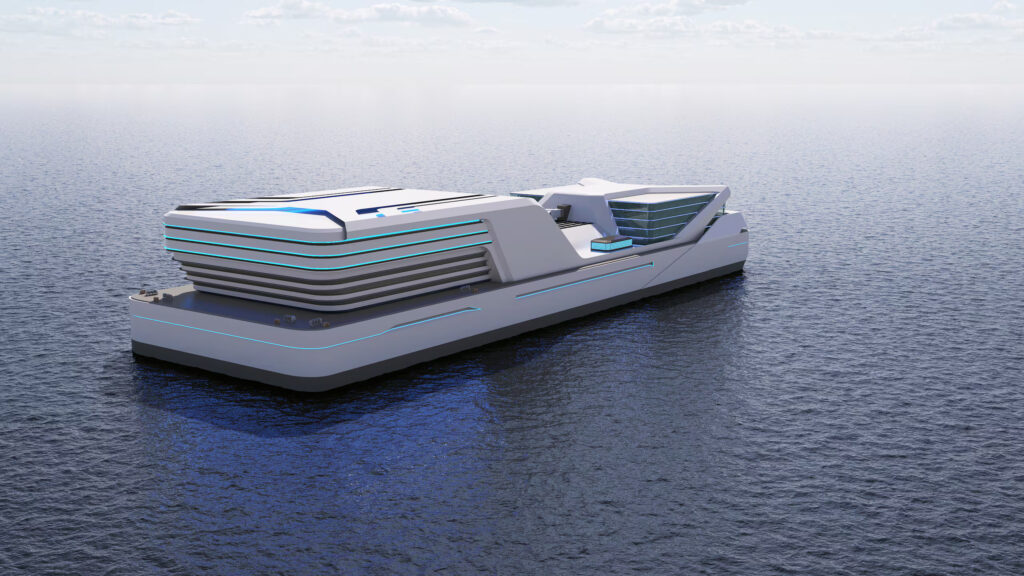
Samsung Heavy Industries CTO and Executive Vice-President Young-kyu Ahn has characterized floating data centers as a new business opportunity that combines the company’s shipbuilding expertise with the growing demand for digital infrastructure. The initial 50-megawatt design is intended to generate its own power while also supporting connections to mainland power grids when needed.
Since offshore data centers require equipment capable of handling marine conditions, Samsung Heavy Industries previously signed an agreement with Supermicro to develop server configurations suited for that environment. Interest in the concept has continued to grow, and the company recently partnered with Dallas-based Mousterian Corporation, which specializes in floating and waterfront data center developments. According to CEO Min Suh, the partnership highlights the commercial viability of floating data center projects.
Samsung’s floating data center initiative emerges at a time when hyperscalers and AI companies are searching for new ways to add capacity. The company recently signed a separate agreement with OpenAI focused on expanding global AI data center infrastructure. If the FDC approach proves viable, future AI compute deployments may extend beyond traditional land-based sites and into offshore locations.
Maybe you’d like some other interesting articles?