
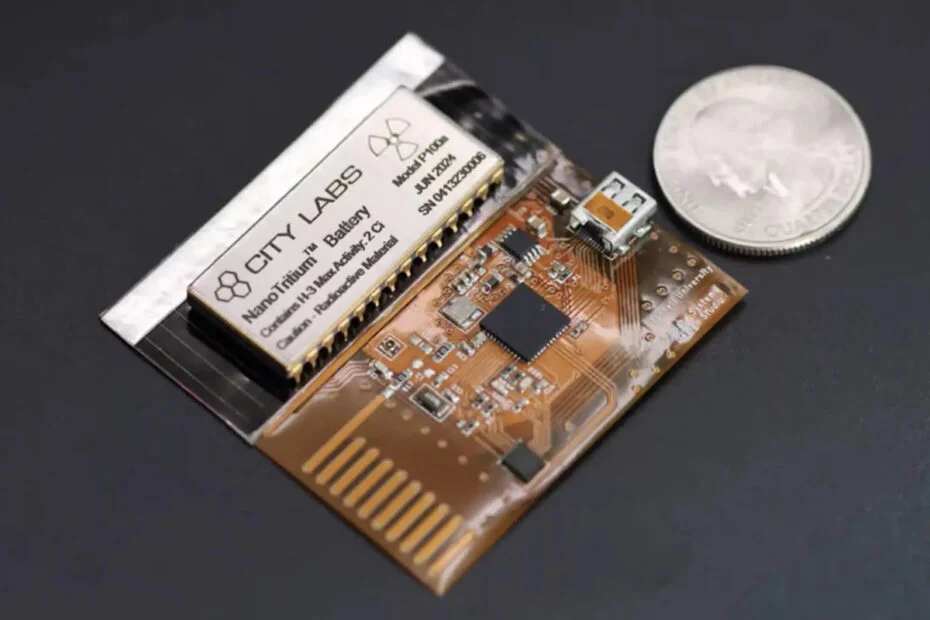
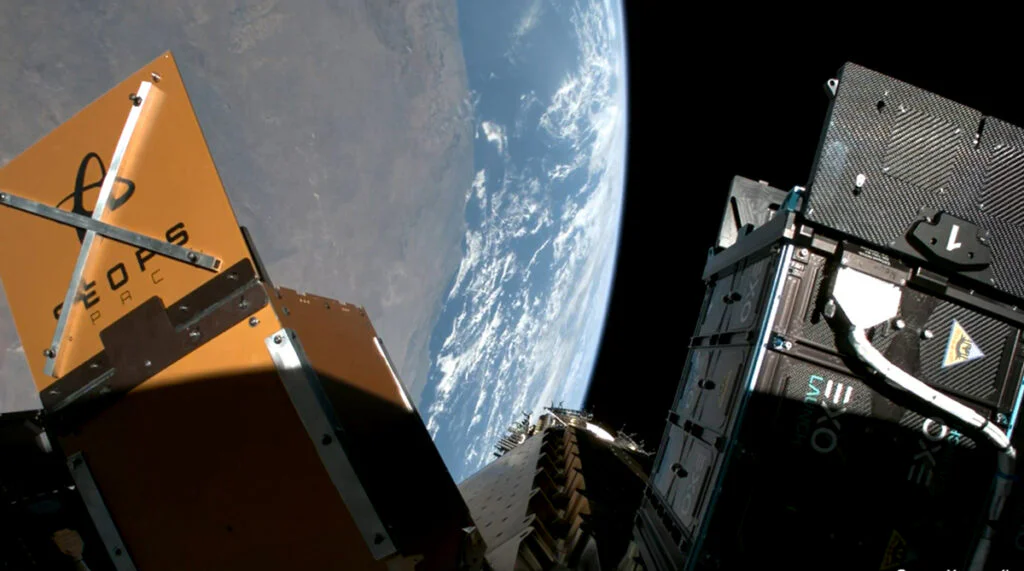
A small satellite launched this week is set to test whether nuclear power can provide a reliable energy source for spacecraft operating where sunlight is too weak or unavailable altogether. The satellite, known as BOHR, reached orbit on July 7 aboard SpaceX’s Transporter-17 rideshare mission, which lifted off from Vandenberg Space Force Base in California. Falcon 9 carried 81 payloads on the flight, deploying them about 50 minutes after launch.
BOHR was developed by Florida-based City Labs and equipped the company’s NanoTritium power system. The betavoltaic device produces electricity by converting beta particles emitted during tritium decay directly through a semiconductor. Unlike conventional space nuclear systems, it does not rely on converting radioactive heat into electrical power.
“This is a historic step for commercial nuclear power in space,” said City Labs CEO Peter Cabauy.
The mission is currently focused on testing the technology in orbit. BOHR uses conventional solar panels to power its normal operations, while the NanoTritium system is being evaluated independently. Researchers hope to determine whether it can provide a stable and long-lasting energy source for future space missions.
If the test is successful, the system could help solve one of the biggest limitations of many space missions. Solar power becomes far less effective in environments with little or no sunlight, including deep space and the Moon’s permanently shadowed regions. These areas, particularly near the lunar south pole, are a major focus of NASA’s Artemis program due to their potential water-ice deposits.
City Labs believes its technology is well suited for missions operating in these harsh environments. Although the current system generates only a modest amount of electricity, the company says the design has room to scale for higher power demands.
The company says one of the system’s strengths is its use of tritium, which produces relatively low levels of radiation compared with many other nuclear materials. This simplifies handling and spacecraft integration. City Labs said its tritium-based power systems are engineered for safe handling, transportation, and use within standard commercial launch environments.
The project was backed by a U.S. Department of Defense contract, hinting that the technology isn’t just meant for space exploration. It could also be useful for defense systems that need dependable power without frequent maintenance.
Right now, BOHR is essentially a test mission. But if everything goes well, the technology could help future spacecraft stay operational for much longer, even in places where sunlight isn’t available to power solar panels.
Maybe you’d like some other interesting articles?