
The HDMI Forum has officially unveiled the HDMI 2.2 specification, raising maximum bandwidth to 96Gbps, twice the capacity of HDMI 2.1. The new standard paves the way for uncompressed 4K video at refresh rates as high as 240Hz.
The increased bandwidth allows HDMI 2.2 to deliver uncompressed 4K video at 240Hz, eliminating the need for Display Stream Compression (DSC) in scenarios where HDMI 2.1 typically depends on it. The specification also supports 4K at 480Hz with 4:2:0 chroma subsampling and uncompressed RGB 8K at 60Hz. By reducing reliance on compression, the new standard offers greater flexibility for high-resolution, high-refresh-rate gaming and display applications.
Compression remains an option when required, but HDMI 2.2 also supports more demanding display configurations. Among them is 1440p at refresh rates above 1,000Hz, a capability that currently sits outside typical consumer use cases.
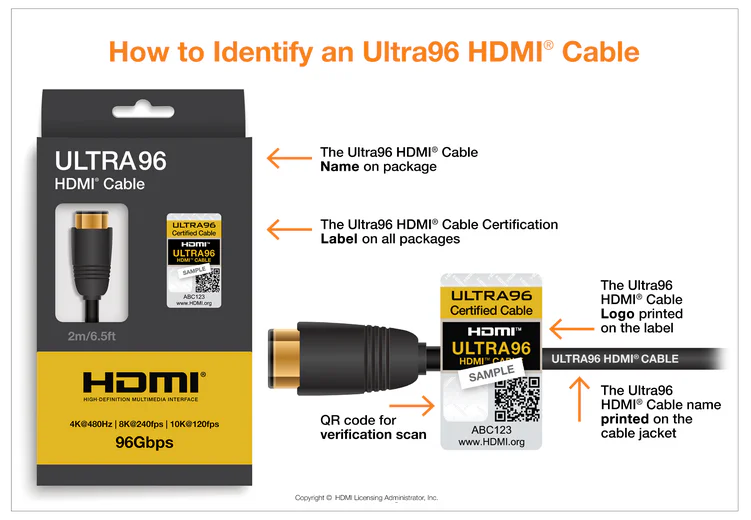
HDMI 2.2 comes in several bandwidth tiers, including 64Gbps and 80Gbps versions, and companies don’t have to support the full 96Gbps speed. This means two devices with the same HDMI 2.2 badge could deliver very different results, so it’s worth checking the specs instead of relying on the label alone.
The situation is somewhat different in the PC market, where DisplayPort 2.1 already provides up to 80Gbps of bandwidth and is commonly found on high-end monitors. DisplayPort has remained the preferred connection for many multi-display setups, and that is not expected to change immediately. Licensing costs may also influence the pace at which HDMI 2.2 is adopted.
HDMI continues to be the preferred connection standard for TVs and home entertainment systems. Features like ARC, CEC, and ALLM are already built into most TVs and home theater gear. With HDMI 2.2, the standard gains a new feature called Latency Indication Protocol (LIP), which helps keep audio and video better synchronized.
Even so, there remains a clear gap between HDMI 2.2’s capabilities and the requirements of today’s content. Most games and video formats don’t come close to saturating HDMI 2.1, while support for 4K at 120Hz is still far from commonplace. Although future consoles could eventually make use of higher refresh rates, broader adoption will require advances in both hardware and software.
Maybe you’d like some other interesting articles?